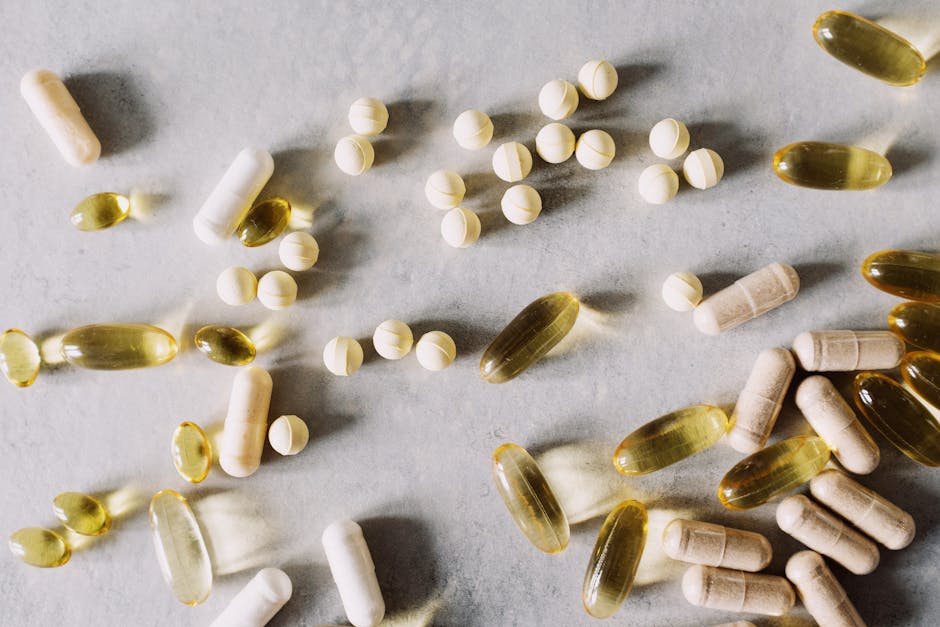
Vitamin D3 + K2: The Perfect Pair
Vitamin D3 helps your body absorb calcium, but without K2, that calcium might end up in your arteries instead of your bones. Here's why taking them together matters for heart and bone health.
Get Weekly Health Tips
Evidence-based nutrition in your inbox
The Problem: D3 Without K2 is Like a GPS Without Directions
Here's what happens when you take vitamin D3 alone: your body absorbs calcium from food really well. Great, right? Not quite. Without vitamin K2, your body doesn't know where to send all that calcium. It's like having packages delivered to your neighborhood with no house numbers.
That calcium might end up hardening in your arteries, settling in your joints, or forming kidney stones—anywhere except where you actually need it: your bones and teeth.
Vitamin K2 is the traffic cop that directs calcium to the right places.
What the Research Shows
A landmark study from Rotterdam followed over 4,800 people for seven years. Those who ate the most vitamin K2 had a 57% lower risk of dying from heart disease compared to those who ate the least. That's a huge difference.
Another study on postmenopausal women with osteoporosis found that taking D3 and K2 together significantly increased bone mineral density in the lumbar spine—better than taking either vitamin alone.
A 2025 study on patients undergoing spinal fusion showed that combined K2 and D3 therapy improved fusion outcomes and bone metabolism better than standard treatment.
How D3 and K2 Work as a Team
Vitamin D3's job:
- Tells your intestines to absorb more calcium from food
- Supports your immune system (important for fighting infections)
- Helps regulate mood and may reduce depression
- Promotes strong bones by maintaining calcium levels
Vitamin K2's job:
- Activates proteins (like osteocalcin) that pull calcium into bones
- Activates another protein (Matrix Gla-protein) that removes calcium from arteries
- Keeps calcium out of soft tissues where it can cause problems
- Protects your cardiovascular system from calcification
Think of it this way: D3 is the crane that lifts the calcium, K2 is the construction worker who places it exactly where it needs to go.
How Much Should You Take?
Vitamin D3:
- Maintenance dose: 2,000-5,000 IU daily for most adults
- If you're deficient: Your doctor might recommend 5,000-10,000 IU daily (get tested first)
- The goal: Blood levels between 40-60 ng/mL (ask for a 25-hydroxyvitamin D test)
Vitamin K2 (MK-7 form):
- Standard dose: 100-200 mcg daily
- The ratio rule: Many experts suggest 100 mcg of K2 for every 10,000 IU of D3
So if you're taking 5,000 IU of D3, pair it with about 100 mcg of K2.
Important: Take both with a meal that contains fat—like eggs, avocado, nuts, or olive oil. These are fat-soluble vitamins, meaning they need dietary fat to absorb properly. Taking them on an empty stomach wastes your money.
Which Combination Supplements Are Worth It?
Here are three we'd actually recommend:
Sports Research D3+K2 What we like: It comes in a coconut oil base (gives you the fat you need for absorption), uses the MK-7 form of K2 (longer-lasting in your body), and the 5,000 IU D3 + 100 mcg K2 ratio is spot-on. Around $20 for a 2-month supply.
Thorne Vitamin D/K2 Liquid What we like: Liquid drops let you adjust the dose precisely, NSF certified for quality and purity, and no unnecessary fillers. Great if you have trouble swallowing pills. About $25 for a 1-ounce bottle.
NOW Foods D3 & K2 What we like: Budget-friendly without sacrificing quality, vegetarian capsules, and a trusted brand with good manufacturing practices. Around $12 for a 2-month supply.
Who Really Needs This Combo?
You should strongly consider D3+K2 if you:
- Live somewhere with long winters or limited sun exposure
- Are over 50 (skin produces less D3 as you age)
- Have been diagnosed with osteopenia or osteoporosis
- Take more than 2,000 IU of vitamin D daily
- Spend most days indoors
- Have dark skin (melanin reduces D3 production)
- Are pregnant or breastfeeding (talk to your doctor about dosing)
One major caution: If you take warfarin (Coumadin) or other blood thinners, talk to your doctor before taking K2. Vitamin K affects blood clotting, and while K2 is generally safer than K1 in this regard, you still need medical supervision.
Can't I Just Get This from Food?
Honestly? It's really hard.
Vitamin D3 food sources:
- Salmon (3 oz): about 570 IU
- Egg yolk (1 large): about 40 IU
- Fortified milk (1 cup): about 120 IU
To get 2,000 IU from food alone, you'd need to eat about 10 eggs or 3-4 servings of salmon every day. Plus, your body makes D3 from sunlight, but that requires 15-30 minutes of midday sun exposure on bare skin several times a week—not practical for many people.
Vitamin K2 food sources:
- Natto (fermented soybeans, 3.5 oz): about 1,000 mcg (yes, this one food is K2-rich!)
- Aged Gouda cheese (3.5 oz): about 75 mcg
- Grass-fed butter (1 tbsp): about 15 mcg
- Chicken liver (3.5 oz): about 13 mcg
Unless you're eating natto daily (a Japanese fermented soybean dish with a strong smell and sticky texture), you're probably not getting enough K2. Most Westerners get less than 50 mcg daily from food.
How to Know If It's Working
Get your vitamin D levels tested now, then again in 2-3 months. You're aiming for 40-60 ng/mL. If you start in the deficient range (under 30 ng/mL), you should see improvement.
For bone health, a DEXA scan can measure bone mineral density—but this is more of a long-term metric, checked every 1-2 years.
Many people report better energy, improved mood, and fewer colds within a few weeks of correcting a D3 deficiency.
The Bottom Line
If you're taking vitamin D3 alone—especially higher doses—you're missing half the story. Adding K2 ensures that calcium ends up strengthening your bones instead of hardening your arteries.
The combination is backed by solid research, it's affordable, and for most people, it's very safe. Just remember to take it with food that contains fat, and if you're on blood thinners, loop in your doctor first.
Disclaimer: This content is for informational purposes only and is not medical advice. Consult with healthcare professionals before making any dietary changes or starting new supplements.
Get Weekly Health Tips
Evidence-based nutrition in your inbox